
The Interviewees
Interview with Efe Erünal & Alexandra Koumpouli, November 2025
1- Both of your biographical profiles emphasize the word of integration in your research and analysis, so that being digital tools into historical research in the case of you Efe and ethnographic methods and community-centred approaches into archaeological research for you Alexandra. Can you expand a bit on the insights you gain from these integration techniques, and do you think this multi-thread approach is often missing in other academia on these subjects?
Efe: My work leverages digital tools to uncover patterns in the economic, demographic, and social histories of the Ottoman Empire and its successor states. Processing vast datasets of archival records, spatial mappings, and structured databases adds a new dimension to historical analysis that complements traditional methods. Digital modelling helps track demographic shifts and economic networks over time, revealing trends that textual analysis alone might miss.
For textual sources, I rely on Handwritten Text Recognition and Optical Character Recognition to process large volumes of Ottoman, French, and modern Turkish materials with relative efficiency. These tools extract structured data from handwritten sources, reducing the need for manual transcription and enabling large-scale comparison. Digital environments also allow the layering of diverse materials – maps, census data, trade registers, and correspondence to build a multidimensional picture of historical processes. In my current work, I combine Ottoman archival series with French consular correspondence, Ottoman Bank and SALT Research holdings, and parish registers. This integration produces datasets that connect economic, social, and spatial history. Such approaches are increasingly visible but still underutilized in Ottoman studies, where traditional archival research remains the dominant method.
Alexandra: When dealing with architecture and material culture, research often focuses on stylistic or typological analysis — identifying forms, trends, and broader architectural movements. While this is important, I find that such approaches can overlook how architecture is lived and experienced.
For me, integrating ethnographic methods allows architecture to be understood as more than its materiality — as a process of space-making. Architecture is not only an object but also a verb: it shapes and is shaped by the everyday practices, choices, and aspirations of its builders and inhabitants.
This perspective leads me to work with sources that lie outside official archives — for example, oral histories, family archives, or stories about houses that reveal how people perceive and inhabit their spaces. These accounts help us trace how stylistic and spatial choices reflect broader social and cultural dynamics, such as mobility, migration, or the circulation of ideas and aesthetics.
In my research in the Eastern Mediterranean, and especially in late Ottoman and modern contexts, this integrated approach has been essential to understanding how local and global influences intersect in the making of architecture and settlements. I think this multi-layered method is sometimes missing in traditional architectural or archaeological studies, which tend to isolate form from experience. Bringing these dimensions together enriches our understanding of architecture as both a cultural and a social practice.
2- The Glavany family were clearly an influential and long-time resident family within the Ottoman realm. Was focussing on them a mark of their higher than ‘average’ of other contemporary families of note (Corpi, D’Andria, Tubini, Alleon, Baltazzi, Whittall etc.) which were also in the upper echelons of influence and patronage in the late 19th century, or was it a case of digging as deep as possible into one family to create a panorama of the interaction between stakeholders of government and Levantines going on in this complex web, so sticking to one thus making it a more manageable dataset to handle?
Our goal was to explore the Glavany family in depth to construct a multifaceted study that captures the broader dynamics of Levantine-Ottoman interactions. Rather than selecting them because of exceptional prominence, we approached their history as a lens through which to understand the entangled relationships between Ottoman governance and Levantine enterprise. At the same time, we did not treat them in isolation. The Glavanys were linked by marriage and partnership with other notable families – the Corpis, de Campis, Vuccino, Westerling, and Freige – through business, patronage, and architecture. These networks surfaced naturally in our research, showing how their influence extended beyond commerce and finance into culture and urban development. Our collaboration was equally important. Coming from different disciplines, Alexandra, from architecture, and Efe, from history, we were able to merge distinct methodologies and sources, uncovering aspects of the Glavany legacy that might have remained invisible in a single-disciplinary study. The result is a view of their social, economic, and architectural presence within the wider Ottoman world.
3- You were able to go right back to the middle of the 12th century Chios to find the first records of Glavanini (part of the Genoese Catholic nobility that held sway on that in that period), a geography that was also the springboard for other later Levantine family networks in Istanbul and Izmir. Do you think the social dynamics of Chios in the Middle Ages are something to take into account in considering how the evolution of feudal foreign landed gentry to merchants covering vital commodities across wide geographies is a key to understanding the impetus for that mobility?
The social dynamics of medieval Chios are crucial to understanding the long-term mobility of families like the Glavanys. Their trajectory—from feudal landed gentry under Genoese rule to prominent merchants operating across wide geographies—reflects broader patterns of adaptation in response to shifting political and economic conditions. The Glavanys’ fame on this most fertile island of the Aegean must have been amplified by the transformation of Chios into one of the most important outposts for trade between Europe and Asia, from the capture of the island and several other nearby locations by the Genoese in 1346 until 1566 when the Ottomans conquered it. The Glavanys’ presence on the island during this period placed them at the intersection of maritime commerce, diplomacy, and Catholic institutions, shaping their supranational identity. Like other Levantine families of Galata and Pera, such as Arnaud, Castagne, Alleon, and Tubini, the Glavanys maintained multilingualism, intermarried within elite Catholic circles, and leveraged their transregional connections to sustain influence across generations.
The Ottoman conquest of Chios in 1566 and subsequent disruptions, such as the Florentine raid of 1599, triggered significant shifts in Levantine mobility. With Chios losing its primacy in trade to Izmir, many prominent Catholic families moved to growing commercial hubs in western Anatolia, especially Smyrna/Izmir and Istanbul. The Glavanys followed this pattern, integrating into the expanding networks of Levantine commerce and diplomacy under the protection of European powers like France. This historical backdrop helps explain how the Glavanys transitioned from a local aristocratic lineage into a highly mobile and influential merchant-diplomatic family. Their adaptability to new economic landscapes and ability to maintain strategic alliances across different political contexts were key to their longevity. Understanding this evolution offers a broader perspective on how the Levantine presence in the Ottoman Empire was shaped by centuries of geopolitical shifts, commercial realignments, and interfamily connections.
4- You were hampered by the fact that no Glavany descendants were available to be contacted but would you consider the world of the Glavany’s in the Levant before WWI is a time hard to visualise and imagine even for descendants, so perhaps little to be gained by that connection, as notions of ‘multi-culturalism’ as modern constructs wouldn’t fit in to how these ancestors saw themselves in these different geographies and different times?
Initially we had no contact with Glavany descendants, and our work therefore concentrated on reconstructing structures and lived experience rather than tracing identity continuity. That changed in March 2025, when, through Loïc Glavany and the attention generated by our video on the Levantine Heritage Foundation website, we met members of the family in Istanbul. Together we visited the restored mansion in Kandilli and the family graves at Feriköy Catholic Cemetery. The family generously opened their private archives, sharing photographs, correspondence, and genealogies. The collection is extensive, and it is our hope that a digital archive will eventually be created with the family’s consent.
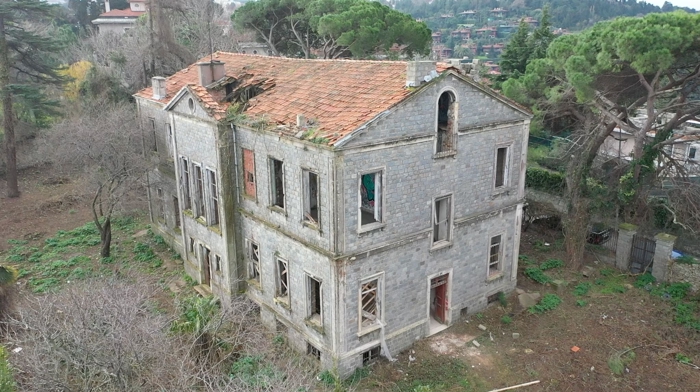
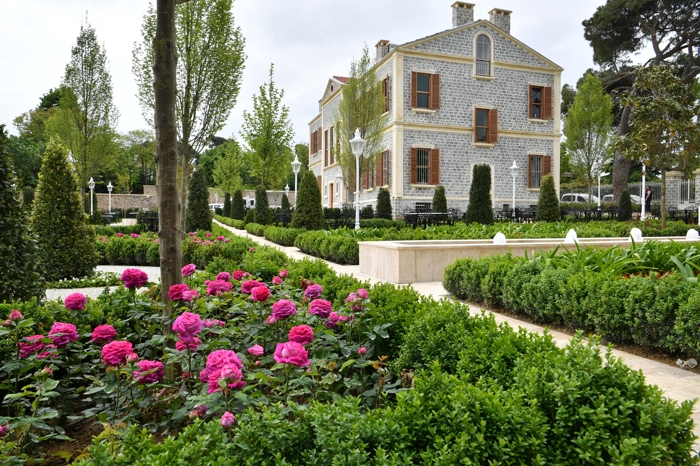
The before and after states of the banker David Glavany (1839-1917) mansion in the Kandilli neighbourhood overlooking the Bosphorus, built in 1893. The restoration was conducted by the local Üsküdar Municipality and the venue opened in September 2023 as a library with a restaurant and has been named Nevmekan (new venue) - official website of the venue: - cultural inventory entry:
image of the ‘Glavani’ building today in Beyoğlu / Pera district.
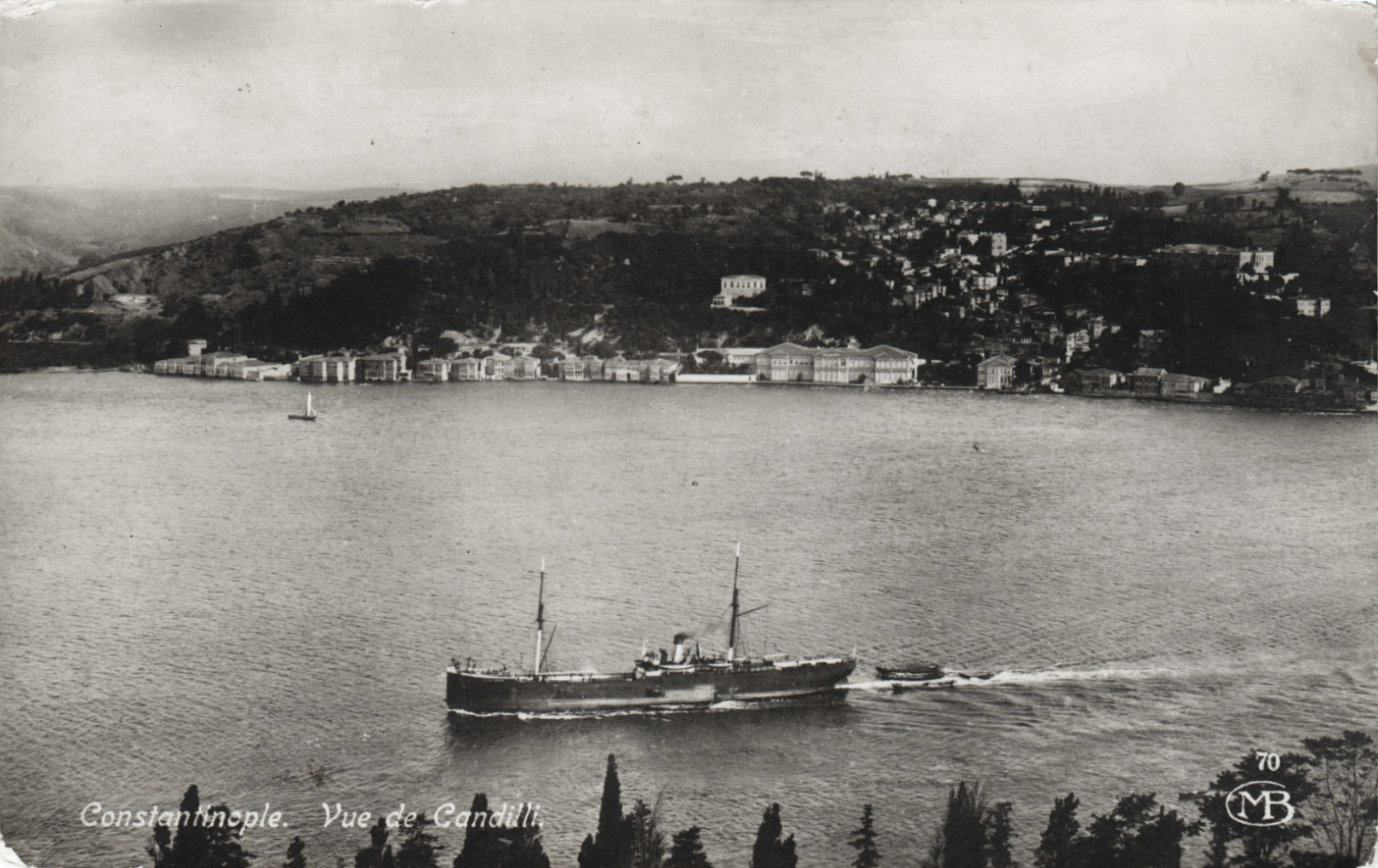
Archive postcard image of Kandilli where the isolated white building on the hillside appears to show the former Glavany residence.
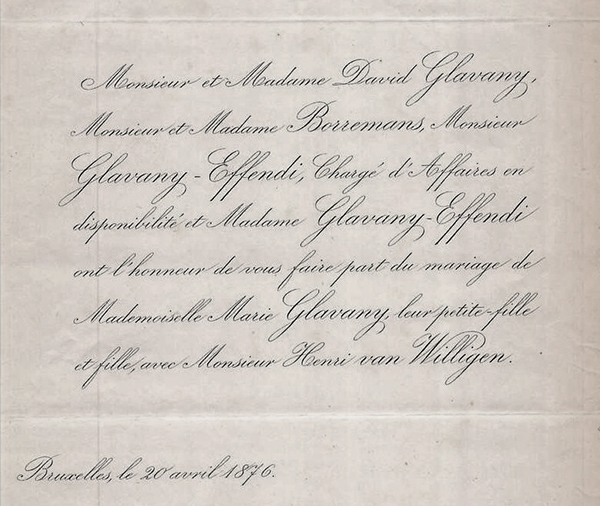
The marriage invitation to the grand-daughter of the same David Glavany (married to Anne Westerling) from 1876 in Brussels. Monsieur Glavany, who is referred to as charge d’affaires (in Brussels), is Faustin Glavany (1829-1879) the father of the bride, who was married to Mathilde Borremans, whose family is also mentioned. Anne Westering was the owner of the spot in Galata where the Ottoman Bank was later built by Alexandre Vallaury.
Additional information by Marie Anne Marandet, also a descendant of this family: The parish registers of Chios do not fit with the family legend saying that the ancestor came from Grenoble in the 18th Century. They were in Chios before 1580. For me they were Croatian. The surname Glavan is of Slavic origin, predominantly found in Croatia and Slovenia. It is derived from the Slavic word ‘glava’, which means ‘head’.
In 1804 in an official document called « Etat des négociants français qui sont à Constantinople » (Archives Nationales) Saverio (Xavier) Glavani - (ca 1680 + ca 1740) is listed under the chapter «divers étrangers sous la protection de la France ». Gaspard Guillaume Glavany (1765-1833) - his grandson - became French in 1818 which means he was not born French. Anne Mezin in her book on ‘Les Consuls de France au siècle des Lumières (1715-1795)’ published in 1997 wrote that Saverio Glavani was « sujet du Grand Seigneur » (Ottoman).
This encounter added emotional immediacy yet also confirmed that the world their ancestors inhabited remains difficult to visualise even for descendants. The late Ottoman Levant was shaped by intricate webs of economic, political, and social ties that do not neatly align with contemporary understandings of multiculturalism. For families like the Glavanys, identity was fluid yet deeply rooted in kinship, commercial networks, and religious affiliations. They navigated multiple legal, linguistic, and diplomatic frameworks—Ottoman, European, and communal—without the rigid national identities we impose today. Their world was one of pragmatically coexisting categories and sovereignties, where being French-protected, Catholic, and Levantine was not contradictory but rather a functional reality. This historical context is often difficult to fully grasp, even for descendants, because modern categories of nationality, ethnicity, and multiculturalism do not map cleanly onto how these families understood themselves. Rather than looking for continuity in identity, our approach focuses on reconstructing the structures and lived experiences of their time—how they moved, operated, and engaged with the shifting political and economic landscapes of the early modern and late Ottoman world.
5- From the 1820s onwards there is this interesting duality of the Ottoman Governing system becoming more liberal and with a series of reforms including minorities getting parity of legal status yet the military and financial outlooks of the Empire become increasingly bleak. Do you think the Ottoman Government had no good solutions there and the Levantines were allowed to fulfill important posts and shaped decisions as no other actors to fill that role were available, or do you think the Ottomans were more generous than we think from the contemporary lens of ‘Capitulations’ and facilitated the activities of the Levantines above other communities as they never saw them as a threat possibly or because high officials cultivated personal friendships with the community built over time?
From the 1820s onwards, the Ottoman government faced a paradox: while it pursued liberalizing reforms, granting minorities increased legal parity and modernizing its institutions, principally the army, its military and financial situation deteriorated. Rising debt, costly wars, and internal instability forced the state to rely on external actors who could bridge gaps in administration, trade, and diplomacy. The Levantines, including the Glavany family, were not only prominent in finance and commerce but also played key roles in diplomatic affairs and the procurement of essential resources, such as grain and arms, for the Ottoman state.
Rather than simply allowing Levantines to fill important posts due to a lack of alternatives, the Ottoman government actively facilitated their role because their centuries-old networks, expertise, and cross-border connections made them indispensable. The empire’s financial constraints and military struggles required intermediaries who could secure loans, negotiate trade agreements, and supply raw materials vital to its survival. The Glavanys, for example, leveraged their commercial ties to European markets to ensure a steady flow of goods, such as tobacco, wool, and munitions, while also engaging in diplomatic functions that helped the empire navigate its complex economic standing and international position.
The state’s reliance on Levantines was not merely a consequence of the capitulations or legal privileges. While these agreements granted certain benefits, the Ottoman elite actively cultivated relationships with Levantine families, recognizing their strategic value in maintaining imperial stability. The Levantines’ lack of political ambitions compared to other groups with nationalist aspirations may have made them preferable partners, but their sustained influence was rooted in their ability to operate within both Ottoman and European spheres. Many high-ranking Ottoman officials formed close personal and professional ties with Levantine merchants and diplomats, ensuring their continued involvement in state affairs.
The Glavanys exemplify this broader dynamic. Beyond their financial ventures, they acted as diplomatic intermediaries, negotiators, and suppliers of vital goods during moments of crisis. Their prominence was not simply a result of Ottoman generosity, but rather a product of pragmatic collaboration. The Ottoman government understood that experienced, well-connected actors were necessary to sustain the empire’s position in a changing world, and the Levantines, through their commercial acumen, logistical capabilities, and diplomatic reach, helped fill that role.
6- Do we get hints of an intellectual side through some generations of the Glavany family, such as Faustin Glavany (1832-1879), who, as an architect, designed the never-realised ‘Temple de la Paix’ for the 1867 Paris Exposition, to be erected at the entrance to Suez Canal with inscriptions in multiple languages?
There is clear evidence of an intellectual legacy within the Glavany family, evident across generations. In the early eighteenth century, for example, Hélène Glavany (1719–1760), daughter of Saverio Glavany, the French consul to Crimea, was immortalized in a portrait by Jean-Étienne Liotard around 1740. This painting, depicting her in Turkish attire within an elite Ottoman household, reflects not only early artistic patronage but also the complex cultural exchanges between European expatriates and the Ottoman milieu.
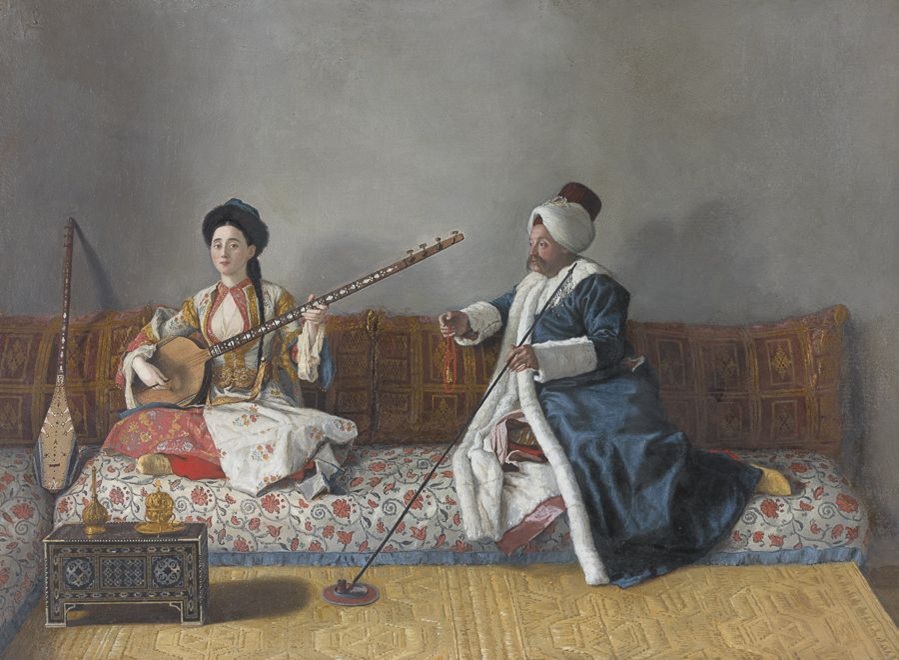
Monsieur Levett and mademoiselle Helene Glavany in Turkish costumes. Helene Glavany was the daughter of Saverio Glavani (Consul of France in Ottoman Crimea) & Marguerite Fabre, painted sometime 1738-42 during Liotard’s Turkey residency.
In the nineteenth century, Faustin Glavany (1832-1879) epitomised this creative cosmopolitanism, as you mentioned. His ambitious architectural design for the Temple de la Paix monument, presented for the 1867 Paris Exposition and intended for the entrance to the Suez Canal, featured inscriptions in hieroglyphics, cuneiform, Hebrew, Ancient Greek, Arabic, Latin, Turkish, and French, symbolising universal communication and shared heritage. Although never built, it reveals an intellect that unites architecture, diplomacy, and humanist ideals, transcending the family’s commercial and diplomatic activities.
Beyond these cultural and artistic markers, the Glavanys were deeply engaged in diplomatic and financial spheres, which required a high level of strategic thinking, financial literacy, and international negotiation skills—qualities that are inherently intellectual. Their involvement in securing loans, managing commercial enterprises, and negotiating essential supplies such as grain and arms positioned them at the intersection of commerce, diplomacy, and statecraft.
Simultaneously, the Glavanys played a significant role in reshaping Istanbul’s urban fabric, an endeavor that, together with their engagement as key figures in advancing technological projects like the construction of Beirut port and the tram lines in Istanbul, testifies to their strategic thinking and ability to operate within complex logistical and financial networks. Their extensive property holdings in key districts such as Galata and Pera influenced the city’s modern skyline. The Glavany Apartment on Tomtom Street (1896), with its neoclassical design, stands as a testament to their involvement in urban renewal, while other properties, from imposing banks to modern apartment blocks and theaters, illustrate their broader contribution to the evolving architectural and cultural landscape. For instance, during the 1890s, Alfred Glavany’s ownership of a theater in the rising Tepebaşı district highlights the family’s active participation in the performing arts and public cultural life.
The intellectual tradition continued into the twentieth century with figures such as Roland Elie Adrien Glavany (1922–2017). As a pioneering aeronautical engineer and lieutenant general, he became the first pilot in Europe to fly twice the speed of sound, extending the family’s legacy from architecture and commerce into military and technological innovation. His son, Jean Glavany, furthered this tradition by holding high-profile political roles in France, serving as head of President François Mitterrand’s cabinet and as Minister of Agriculture, which highlights the family's enduring commitment to public service and intellectual excellence.
Together, these examples from early artistic patronage and architectural innovation to modern technological and political achievements illustrate a multifaceted intellectual legacy within the Glavany family. Although our research has not explicitly sought to trace an intellectual lineage, the evidence across generations spanning architecture, diplomacy, finance, and governance demonstrates a sustained engagement with spheres that demand intellectual rigor. Whether through the design of monumental architecture, the negotiation of transnational financial deals, or the strategic oversight of political and technological initiatives, the Glavanys exemplified a tradition of intellectual depth intertwined with practical influence.
7- There are many buildings in Galata / Pera and beyond for which the architects / owners / former occupants are not known or merely suspected, and the Glavany name is only associated with one apartment and one street today. Do you see a major potential in deeper integrated research revealing by cross-referencing a lot more confidence in securing and assigning properties to people? Do you know if such a database study has ever been attempted for Istanbul?
There is great potential in combining various sources to establish stronger links between individuals and properties. Systematic comparisons of old maps with land records from Ottoman archives, financial documents from banks, and commercial papers can shed light on ownership patterns, architectural commissions, and the broader social landscape of places like Galata and Pera.
To the best of our knowledge, no structured compilation of these materials has been created that allows for efficient cross-referencing. As part of our work, we are attempting to consolidate these scattered records to create a framework that reveals overlooked connections and provides a more precise understanding of how these spaces evolved.
As buildings are carefully documented with accuracy, it becomes increasingly possible to pinpoint the ownership of individual apartments or commercial structures with greater precision. By aligning architectural details with archival evidence, financial transactions, and historical maps, we can move beyond broad associations and establish concrete links between people and properties. This method, we believe, will not only enhance our understanding of urban history but also provide a foundation for reassessing the role of Levantines like the Glavanys in shaping these spaces.
8- Your work is scheduled for publication as a chapter in the forthcoming book ‘Ottoman Mobilities in the Global Nineteenth Century’, edited by Sibel Zandi Sayek and Belgin Turan Özkaya (under contract with De Gruyter), in April 2026. It seems your current findings would easily exceed a chapter and perhaps you are considering deepening your research on this family and legacy between now and publication date. Do major compromises have to be accepted when shortening the length of your work, or is there an art for this reduction?
Our chapter was crafted with the book’s specific focus on Ottoman cultural mobilities, so we limited our scope to the Ottoman Empire and its territories. We chose to emphasize economic aspects, key figures, significant architectural contributions, and the relationships the Glavanys developed with other prominent Levantine families. To respect the editorial guidelines, we streamlined the broader socioeconomic context, aiming to introduce these themes but leaving room for readers to pursue more detailed exploration elsewhere.
Additionally, word limits and editorial suggestions guided our selection of materials, requiring us to make careful compromises, especially concerning visuals. We were restricted to using only copyright-compliant images, which resulted in reductions not only in the documentation of banking and financial records but also in the architectural visuals we had initially hoped to include. Some of our own photographs, for example, had to be left out. These constraints inevitably shaped the way certain aspects of the Glavanys’ legacy could be presented. Banking and financial activities, in particular, lend themselves to visual illustration, whether through historical ledgers, investment documents, or architectural records of commercial properties, yet these materials often fall outside the realm of freely accessible sources, limiting our ability to integrate them fully. The same applies to certain urban development projects tied to the family, where images could have provided a more immediate grasp of their role in reshaping parts of Ottoman cities.
At the same time, these necessary reductions sharpened our core narrative, encouraging us to distill the most essential aspects of the Glavanys’ impact within the Ottoman world. This process of selective inclusion is not just a response to space limitations but also a methodological choice: rather than attempting an exhaustive catalog, we focused on patterns of mobility, influence, and economic agency. While this approach strengthens our argument, it inevitably leaves certain areas less explored, particularly those requiring cross-referenced archival research that remains in its early stages.
Far from being a limitation alone, this also presents an opportunity. Many aspects, including details about the Glavany family’s activities and their significance, are still untapped, offering the potential to develop a more multifaceted and complex narrative in future research. The need to cut certain elements has, in a way, deepened our engagement with the subject and will allow us to refine key themes while identifying promising avenues for expansion. Whether in tracing the family’s financial networks, mapping their urban footprint with greater precision, or exploring their cultural and intellectual affiliations beyond what we could include in this chapter, the work left aside is not merely excess but the foundation for future investigations.
Subsequent developments have opened up new possibilities for expanding this research beyond the chapter. Access to the Glavany family’s private archives this year has provided a trove of visual and written materials, including photographs, letters, architectural sketches, and genealogical records. These sources add a personal and human dimension to our project, complementing the institutional and financial documentation that underpins much of the existing narrative. Because the collection is extensive and delicate, a dedicated digital archive is being planned under the family’s supervision to ensure long-term preservation and curated scholarly access. Integrating these private holdings with our academic datasets will enable a richer portrayal of the Glavany legacy, bridging data-driven and human-centred perspectives.
Far from being a limitation, the act of condensing our work has clarified our direction. The material left outside the printed chapter now forms the backbone of future studies, where textual, visual, and spatial evidence can be woven together into a more complete account of the family’s contribution to the economic, architectural, and cultural landscape of the late Ottoman world.
9- Do you detect in Ottoman archives any prejudices we might term for Levantines who clearly have no interest in integrating themselves into the Muslim fold yet mostly did very well for themselves in that environment? Do the scribes who noted these archives refer to the Glavanys and other Levantines as French, English, etc., even when clearly born over many generations in the Ottoman Empire?
Ottoman archival records present a nuanced picture when it comes to the categorization of non-Muslim elites like the Glavanys. In some instances, officials would note the European origins of these families by referring to them as “French” or “English,” although these notes became more pronounced in the nineteenth century as these powers secured more commercial and legal privileges in the Empire and powerful non-Muslims acquired citizenship from the Europeans. In most cases, Levantines were simply mentioned by their family name. We need to keep in mind that designations like ‘English’ or ‘French’ appear to be primarily descriptive rather than derogatory. They reflect an administrative necessity to recognize distinct cultural and commercial networks rather than a deliberate attempt to segregate or ostracize. In practice, these families were deeply integrated into the Ottoman state apparatus, entrusted with key bureaucratic, diplomatic, and financial roles that required both specialized expertise and a profound understanding of transnational trade.
Moreover, it is important to understand that integration in the Ottoman context was not defined by a binary of “Muslim” versus “non-Muslim” or “insider” versus “outsider.” Urban centers like Istanbul were home to diverse social strata, including both Muslim elites and non-Muslim families who maintained their distinct cultural markers while simultaneously being integrated into the state’s governance and economic networks. The Glavanys, for example, not only thrived in their commercial and diplomatic roles but also held positions in the bureaucracy—often acting as intermediaries between the Ottoman state and European powers, such as family members serving as French consuls or Faustin being the Ottoman chargé d’affaires to Belgium. Their participation in institutions such as the Public Debt Administration, where they worked alongside prominent Muslim and non-Muslim figures alike, underscores a pragmatic system that valued competence and connectivity over rigid cultural assimilation.
In sum, while Ottoman scribes occasionally noted European affiliations in their records, these references were more about documenting the complex, multilayered identities that characterized the empire, rather than expressing prejudice. The Glavanys’ effective integration into Ottoman society, evidenced by their pivotal roles in finance, diplomacy, and urban development, demonstrates that the empire’s approach to identity was flexible, pragmatic, and deeply interwoven with its multicultural, cosmopolitan fabric.
10- If you are planning to deepen your investigations of this family, which sides of that legacy would you concentrate on? Is there a role for the Levantine Heritage Foundation in helping in any way?
Our current work lays a solid foundation for understanding the Glavany legacy in Istanbul, yet it is clear that their influence, and indeed the broader story of Levantine families, extends far beyond the urban core of the Ottoman capital. In deepening our investigations, we plan to focus on several interrelated dimensions of this legacy.
First, we aim to explore provincial networks in greater detail. Although our current research emphasizes Istanbul, there is compelling evidence that the Glavanys played significant roles in regions such as Adana, Beirut, and other parts of Anatolia. By bridging archival records from Ottoman and European banking institutions, land records, and title deeds with visual materials such as historical photographs, architectural plans, and maps, we hope to reconstruct a more detailed picture of their financial, diplomatic, and infrastructural activities across the empire.
Digital and spatial humanities are central to our next phase of research. The potential of digitization is immense: integrating disparate datasets into a unified, searchable database will allow us to trace the Glavanys’ transnational networks with unprecedented precision. Digital mapping and GIS tools will enable us to overlay historical maps with modern georeferenced images, shedding light on the full extent of their property holdings, trade routes, and infrastructure projects.
This next stage builds on the access we have already established to the Glavany family’s private archives, which were shared with us following our earlier collaboration. These materials, including photographs, letters, and genealogical papers, provide an essential visual and narrative dimension that complements institutional collections. Establishing a dedicated digital archive, developed collaboratively between the family, researchers, and the Levantine Heritage Foundation, will ensure the long-term preservation and accessibility of these materials. The Foundation’s archival infrastructure, visual and textual collections, and searchable online library are ideally placed to support such an initiative, offering both technical expertise and an engaged audience of scholars and descendants.
Beyond economic and infrastructural dimensions, we also intend to examine the Glavanys’ cultural and intellectual legacy more closely. Their involvement in diplomacy, artistic patronage, theater ownership, and public space management reveals a complex identity that bridged Eastern and Western traditions. By linking the family’s material and documentary heritage with their architectural and social footprint, we hope to create a comprehensive, multidimensional understanding of how their networks contributed to the modernization of Ottoman urban life. In collaboration with the Levantine Heritage Foundation, this work can extend beyond scholarship to public history, through exhibitions, digital storytelling, and community engagement that reconnect the Glavany name to the living fabric of Istanbul and the Eastern Mediterranean.
Interview conducted by Craig Encer
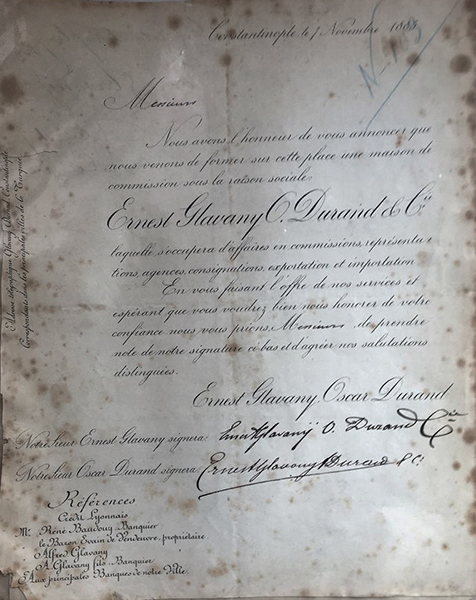
An announcement from 1885 detailing the new partnership between Ernest Glavany and Oscar Durand (another prominent local Levantine family member) to form an import and export commission house, additionally displaying at the bottom the references of allied family businesses and high connections.
A trade letter from a Henri Glavany from a generation earlier (1858) to Livorno.
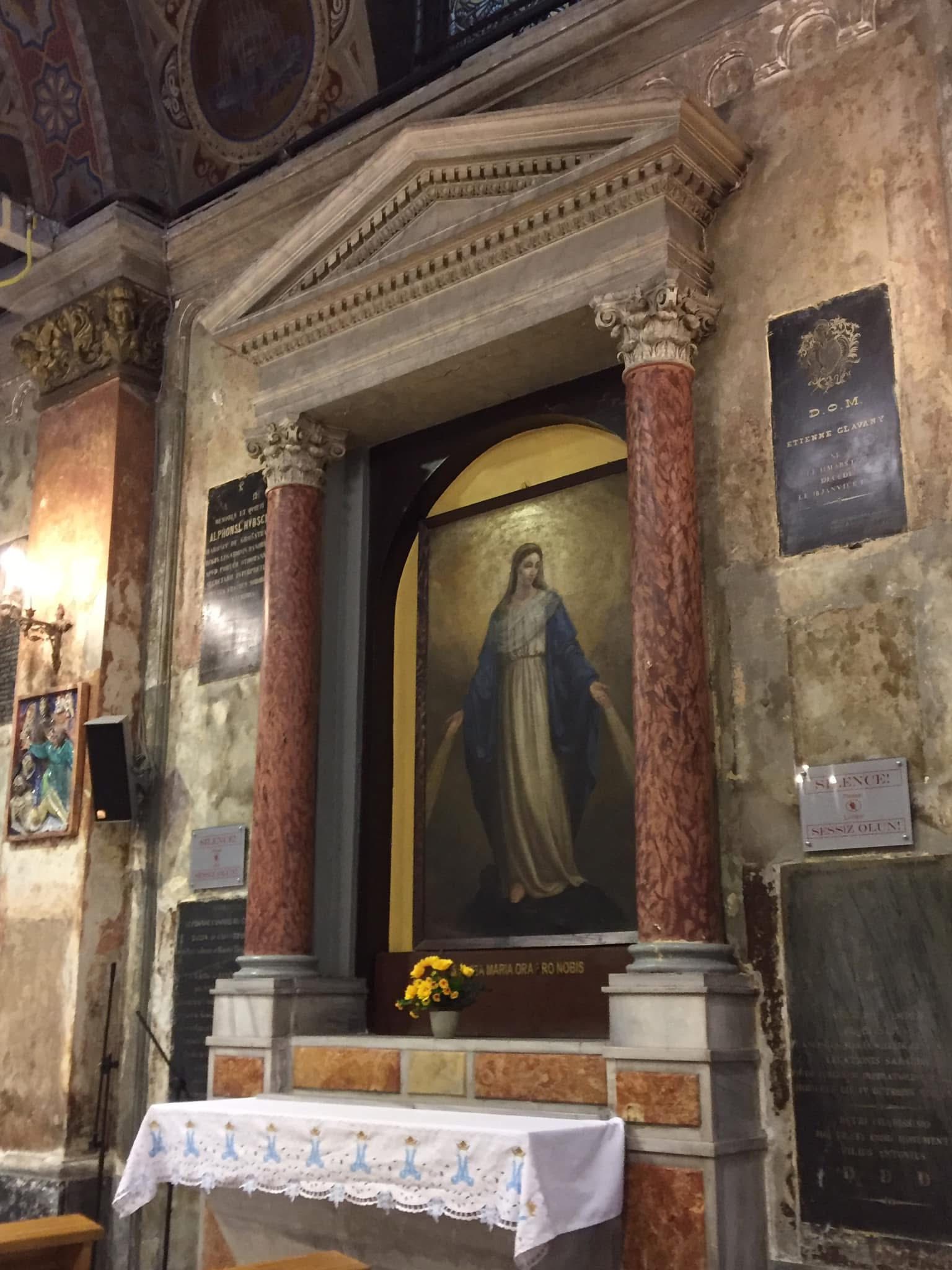
Memorial plaque to Etienne Glavany on the wall of the Santa Maria Draperis church in Beyoğlu, Istanbul. Etienne Joseph Félix Glavany (1830 Kandilli - 1905 Constantinople) was the son of David Théodore Michel Glavany & Anne Westerling (Dutch origin family) - later generations selection of family photos:

The former Glavany mansion of Moda
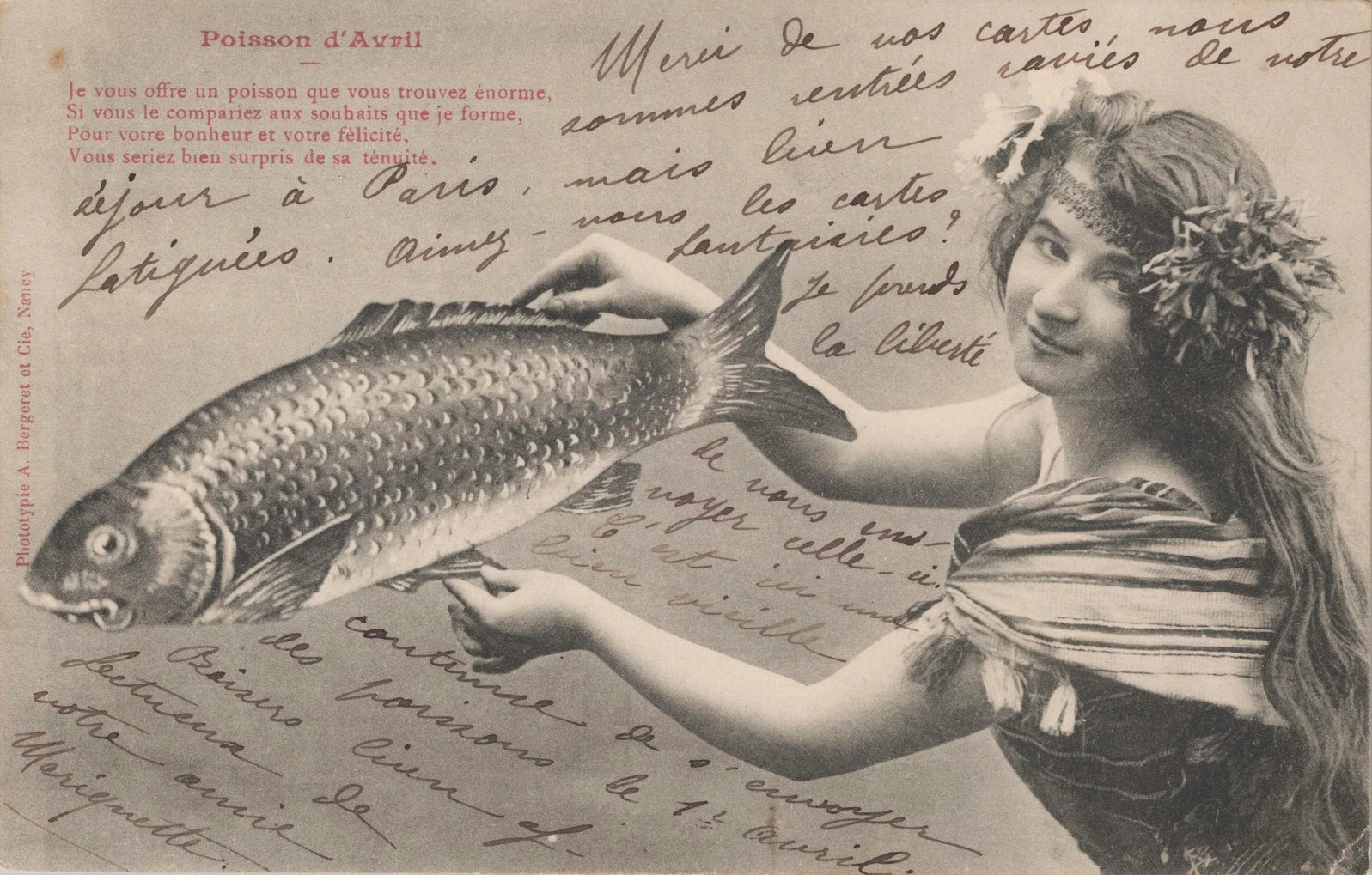
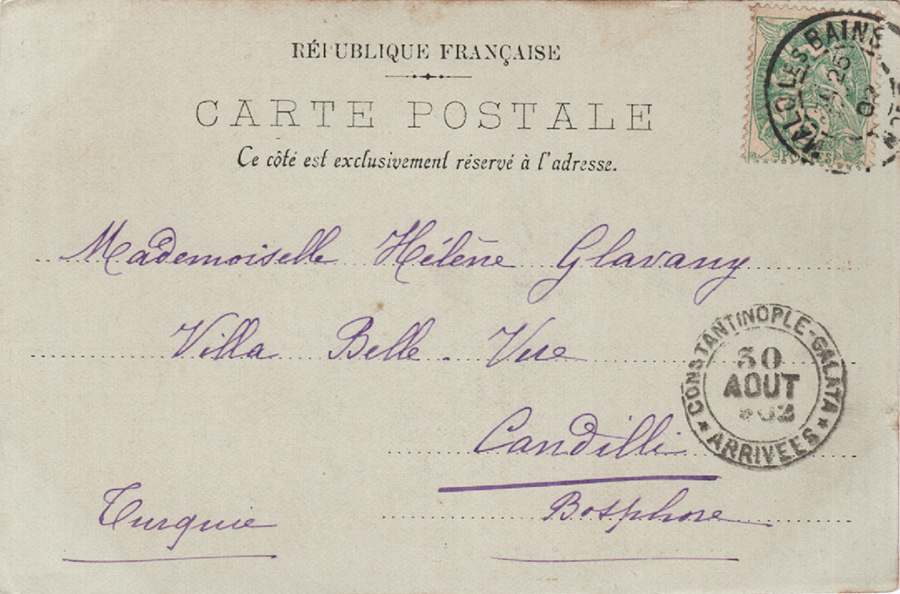
Postcard sent to Miss Odette Glavany, Villa Bellevue, Candilli [Kandilli], Bosphore in 1902 (?) with witty classic Poisson d’Avril imagery with a four-line rhymed verse referencing the April 1st fish-giving tradition, publisher: A. Bergeret et Cie, Nancy — a flagship name of French Belle Époque postcard publishing. This gives a family name for their residence in that quarter - hover over image for reverse. Odette Anne Marie Madeleine Glavany (1887-1983) was the daughter of David Dominique Antoine Glavany (mentioned above - 1839-1917) and Valentine Berthe nee François-Montgalvy, and married in 1910 Maurice Descormiers. Below a similar period postcard sent to the same address to a later generation Miss Hélène Glavany. Hélène Thérèse Marie Glavany (1886-1976) was the elder sister of above.