
Ephemera
Ovide Curtovich paintings
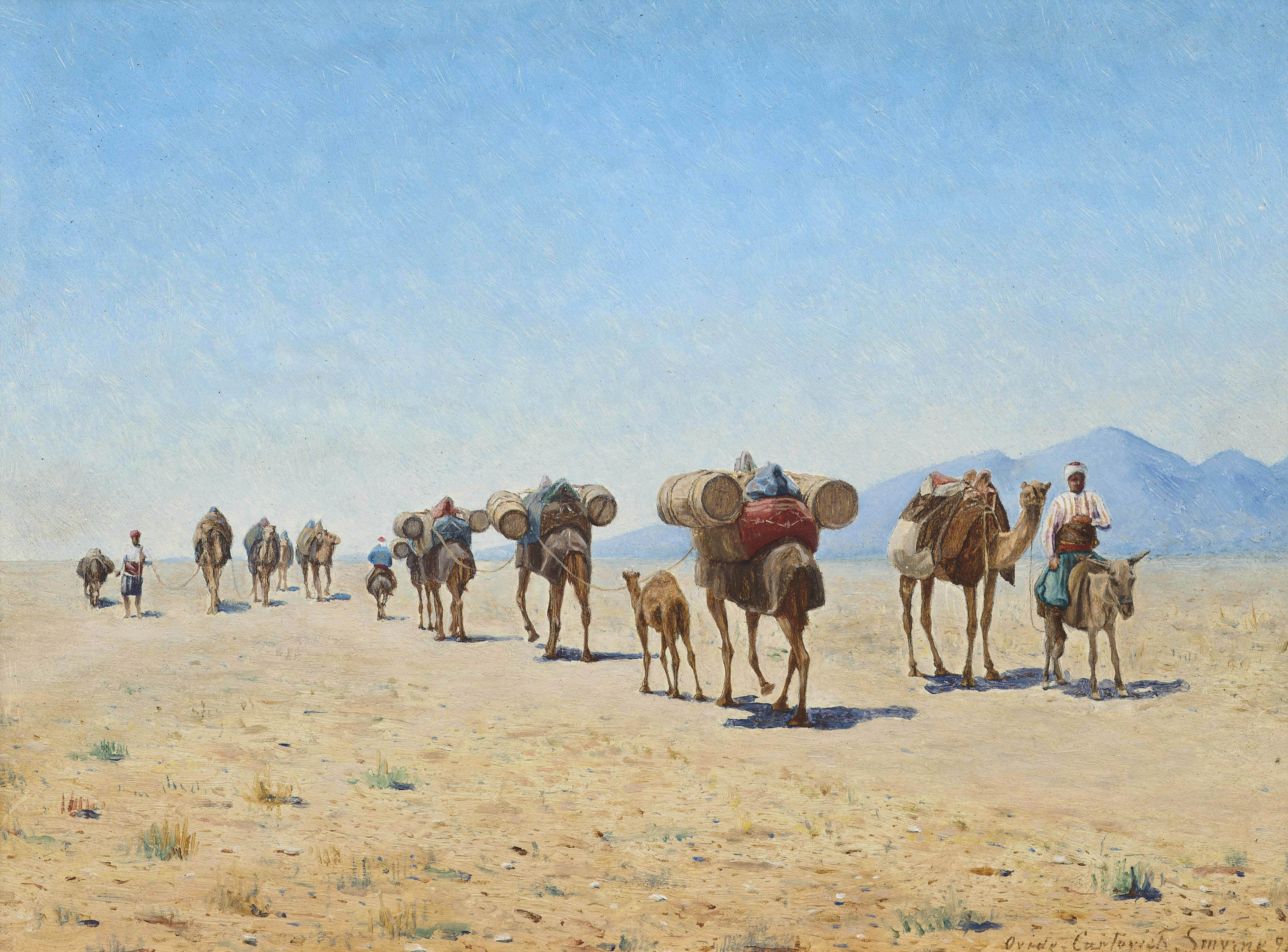
The name Curtovich appears in Catholic parish records of Smyrna as early as the late 18th century in that city (Caterina Curtovich marries Demetrio Mavrocordato around 1800). Ovide Curtovich lived between (1855 – 1930) was a talented ‘Orientalist’ painter but in constrast to most of those practicing in that art genre, he was truly local. But Ovide himself doesn’t feature in those registers, likely lost with the chaos of the 1922 fire or perhaps he wasn’t born in Smyrna, but clearly was brought up that city.
There are additional details on the life of this painter as revealed by the author and historian Oliver Jens Schmitt outlined in his book ‘Levantiner. Lebenswelten und Identitäten einer ethnokonfessionellen Gemeinschaft im osmanischen Reich im "langen 19. Jahrhundert", 2005’: These details are based on a document kept in the French Diplomatic Archives in Nantes and belonging to the files of the French Embassy in Istanbul (Series: E, Box 504); this document is an autobiographical summary written by Curtovich himself, who applied for a French passport. According to this, the painter was the child of a father born in Fiume (Rijeka, which is now within the borders of Croatia, was then within the borders of Austria-Hungary) and a mother from Smyrna; he attended the Lazarist High School in Smyrna in the 1870s, went to Trieste in 1877 and established business connections for trading companies between Trieste and Smyrna, and also obtained a French diploma, thus gaining the right to teach in schools. The same text states that Curtovich, who returned to Smyrna in 1897, began studying painting at the Vienna Academy on the recommendation of the Austrian vice-consul, went to Paris in 1883, and went to Budapest to recover from a nervous illness he had contracted. Curtovich’s paintings were exhibited at the Berliner Künstlerhaus and the Royal Academy in London, and it is stated in the same document that he painted a portrait of the Sultan in 1911. However, it seems that all this did not help the artist much with the consular authorities; Austria-Hungary declared itself unauthorized because he was not registered in the Fiume population register, and France could not see a connection between its own nation and the artist. One of the limited sources where the painter’s name is mentioned is the Smyrna trade yearbooks published in the 1890s; Ovide Curtovich’s name, which appears under the heading ‘Painters’, is highlighted in large print and framed, indicating that the painter was active as a painter in Smyrna in the 1890s, and clearly later as shown by the gallery below.
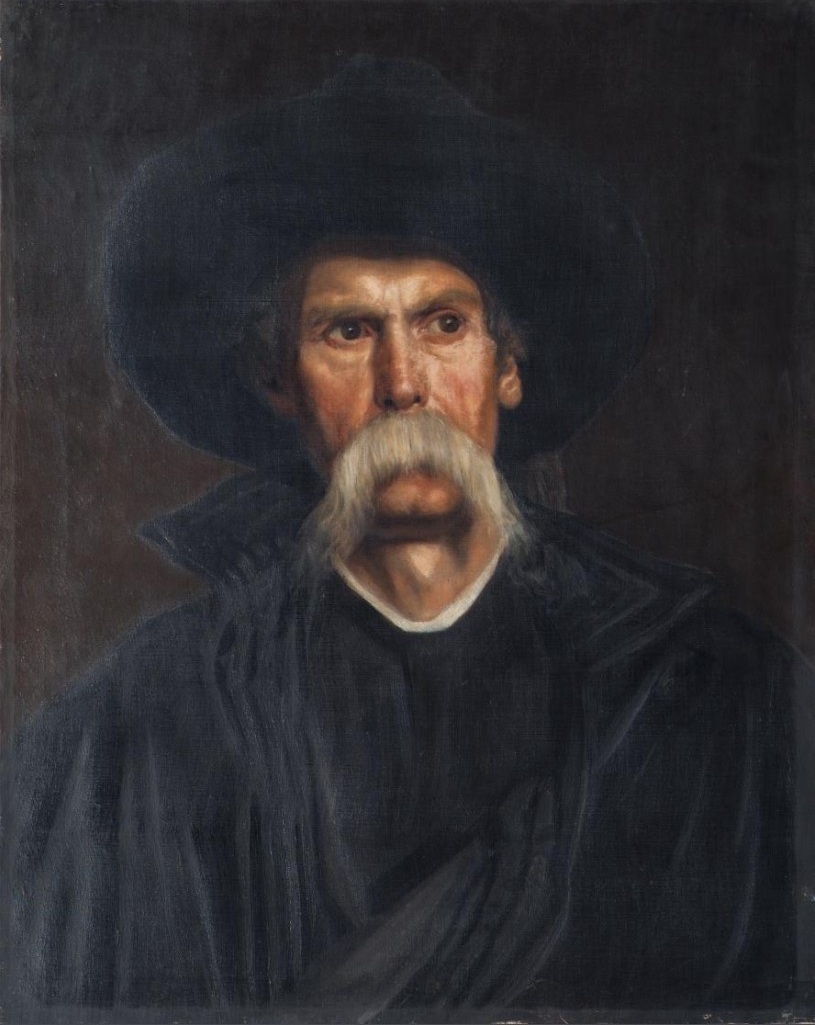
Ancient South Slav, undated, oil on canvas
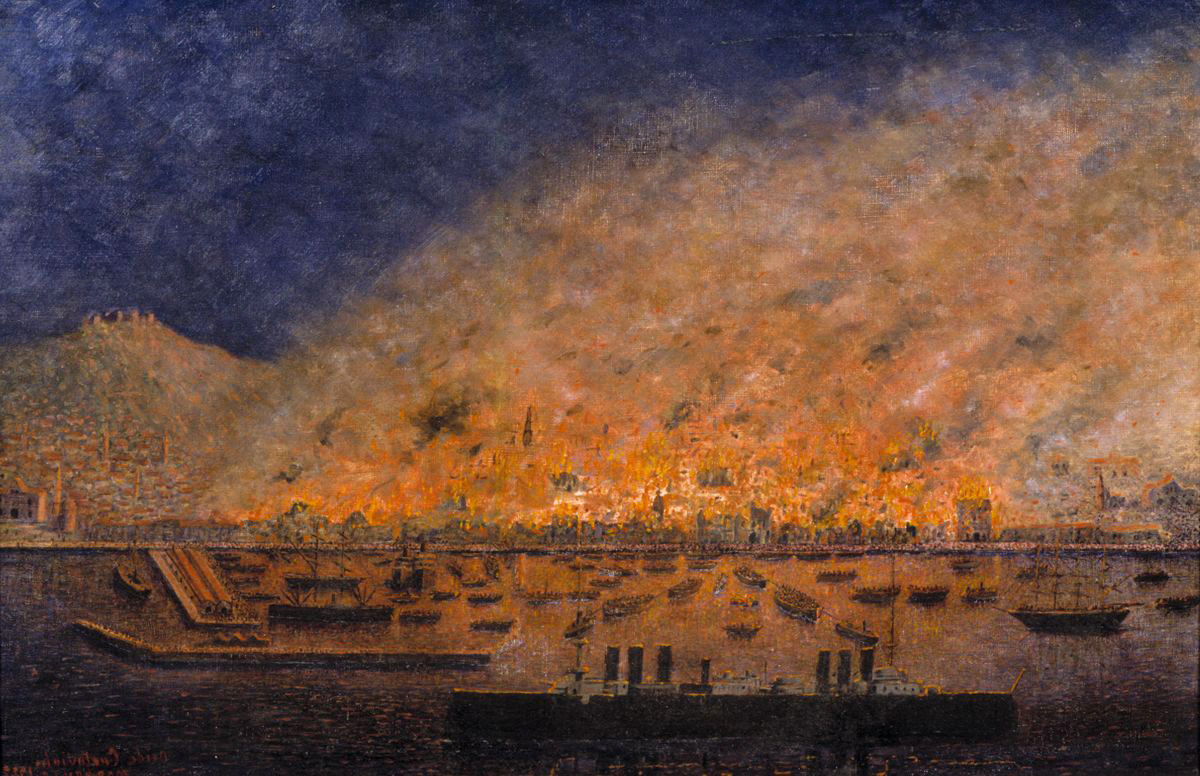
The Great Fire of Smyrna of 1922, the only known contemporary painting of this dramatic event. It is not clear if Curtovich was an eye-witness. Oil painting displayed in the Benaki Museum, Athens.

Petrakaki d’Andria (Pierre ‘Petrakaki’ de Andria 1827-1907) painted by curtovich.
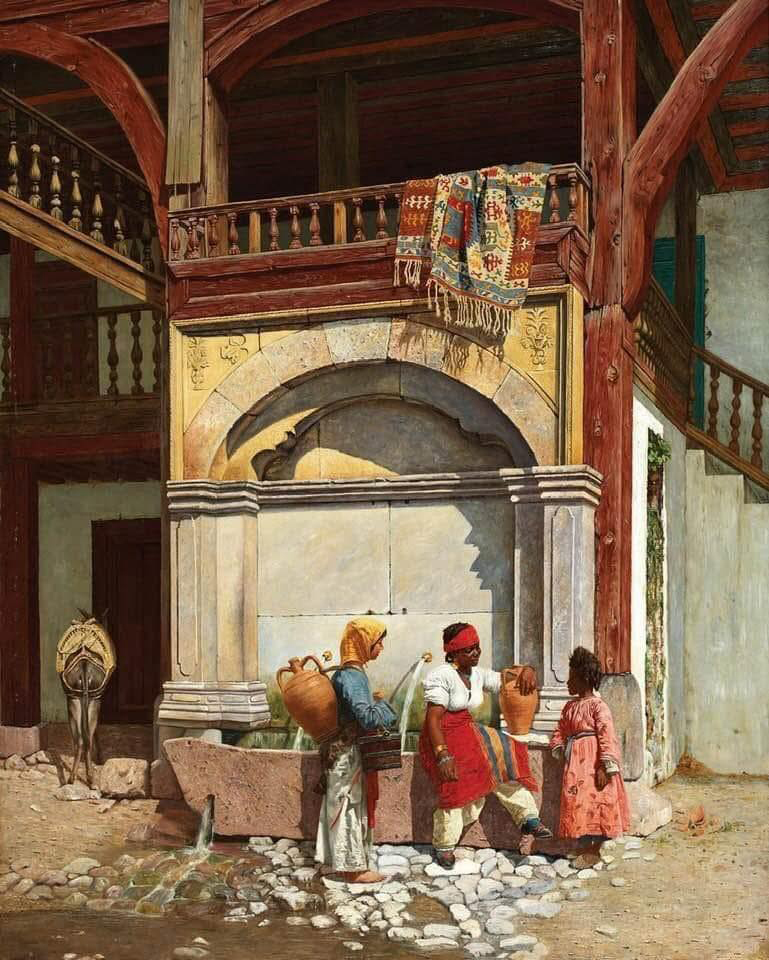
The courtyard of Kara Osmans palace at Manisa, Turkey, 1896. Oil on canvas. This painting was sold by Christies in 2009 for £25,000.
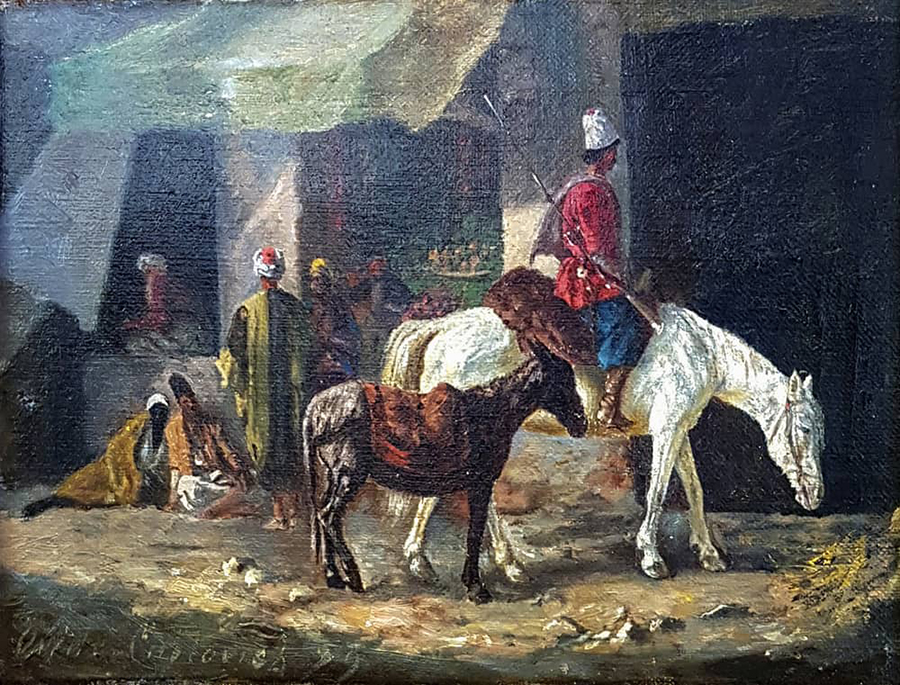
‘A Rider’, possible date 1899? Oil on canvas
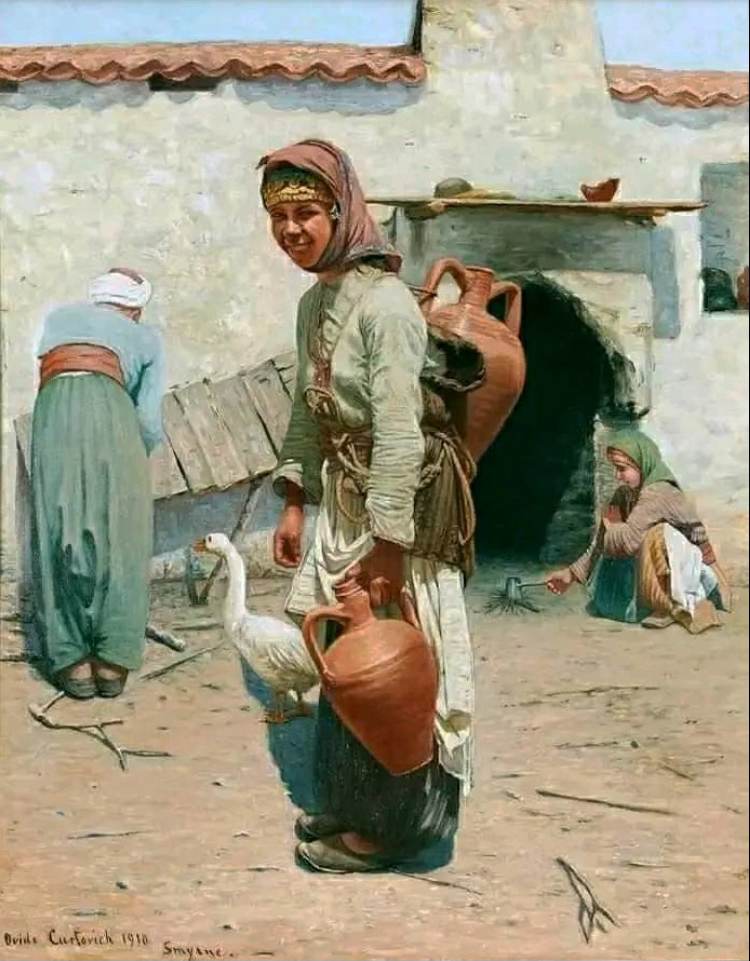
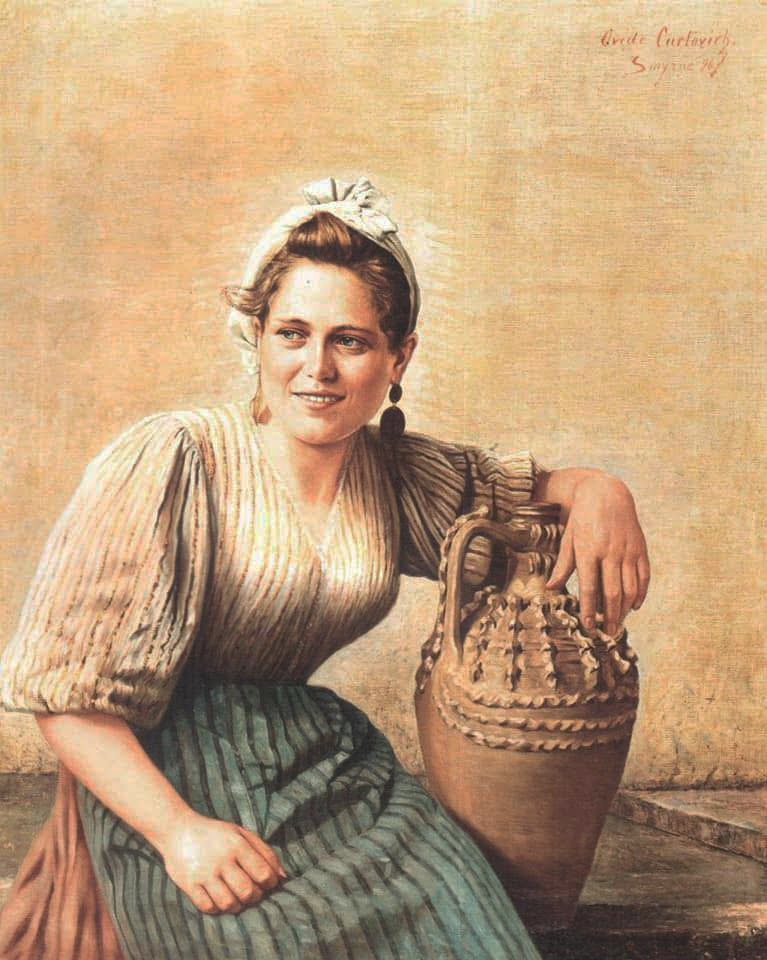
‘Smyrna’, girl carrying water, date 1910.
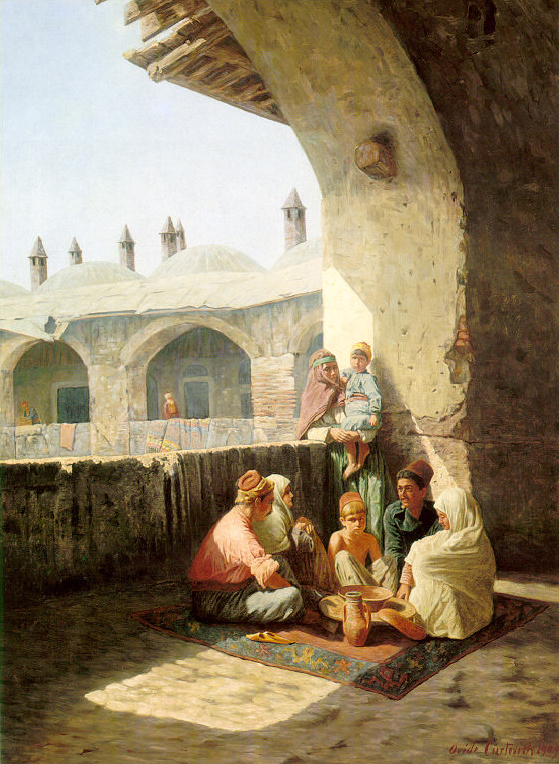
‘A seated group’, 1909 Probably one of the hans of downtown Smyrna. Oil on canvas
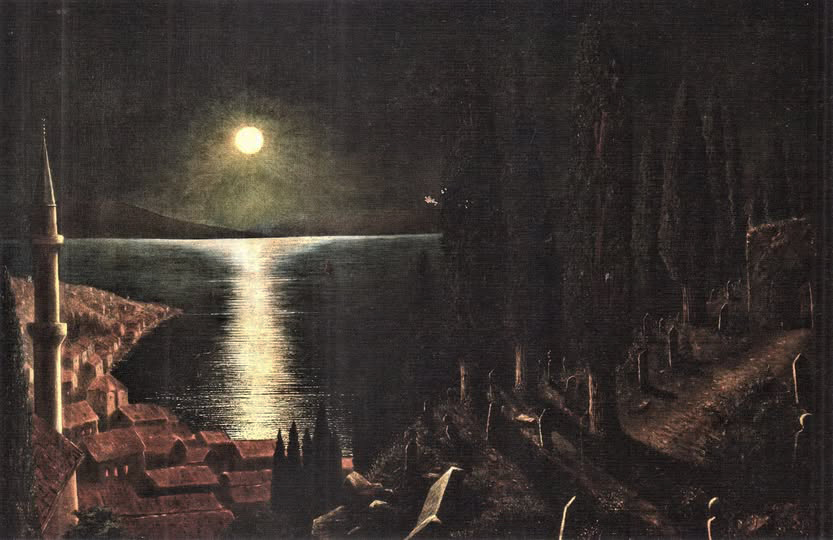
‘Bay of Smyrna from Bahribaba’, undated. This painting has been deliberately ‘Orientalized’ as this neighbourhood (Karataş) was a predominantly Jewish quarter at the time with no prominent mosque and the hillside covered in Moslem style cemetery in reality roughly equates to the ‘English Garden’ and a little further was the former extensive Jewish cemetery where slabs are all horizontal as in their tradition. This points to a painting done more for commercial viability rather than accurate depiction of the place.
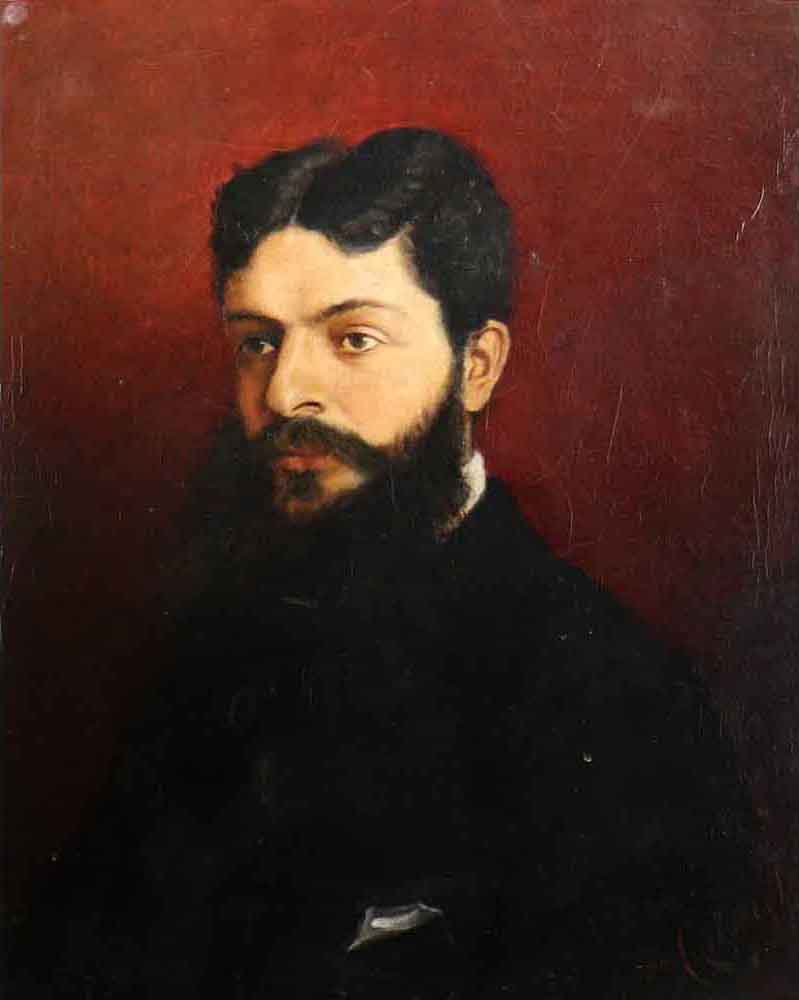
Portrait of “George Ypsilantis (1879)”. Ypsilantis or Ypsilanti was a Greek Phanariote family which grew into prominence and power in Constantinople during the last centuries of Ottoman Empire and gave several short-reign hospodars to the Danubian Principalities. It is probable that this person was a descendant in this family.
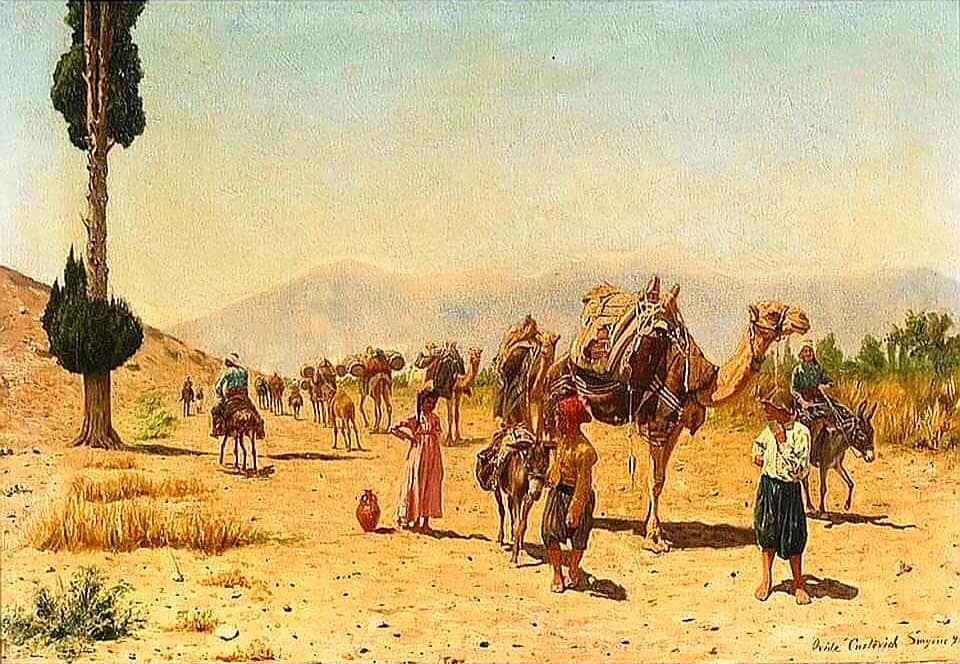
‘On the high road to Nymphia’, undated. Nymphia is the former name of Kemalpasa, a market town near Smyrna.
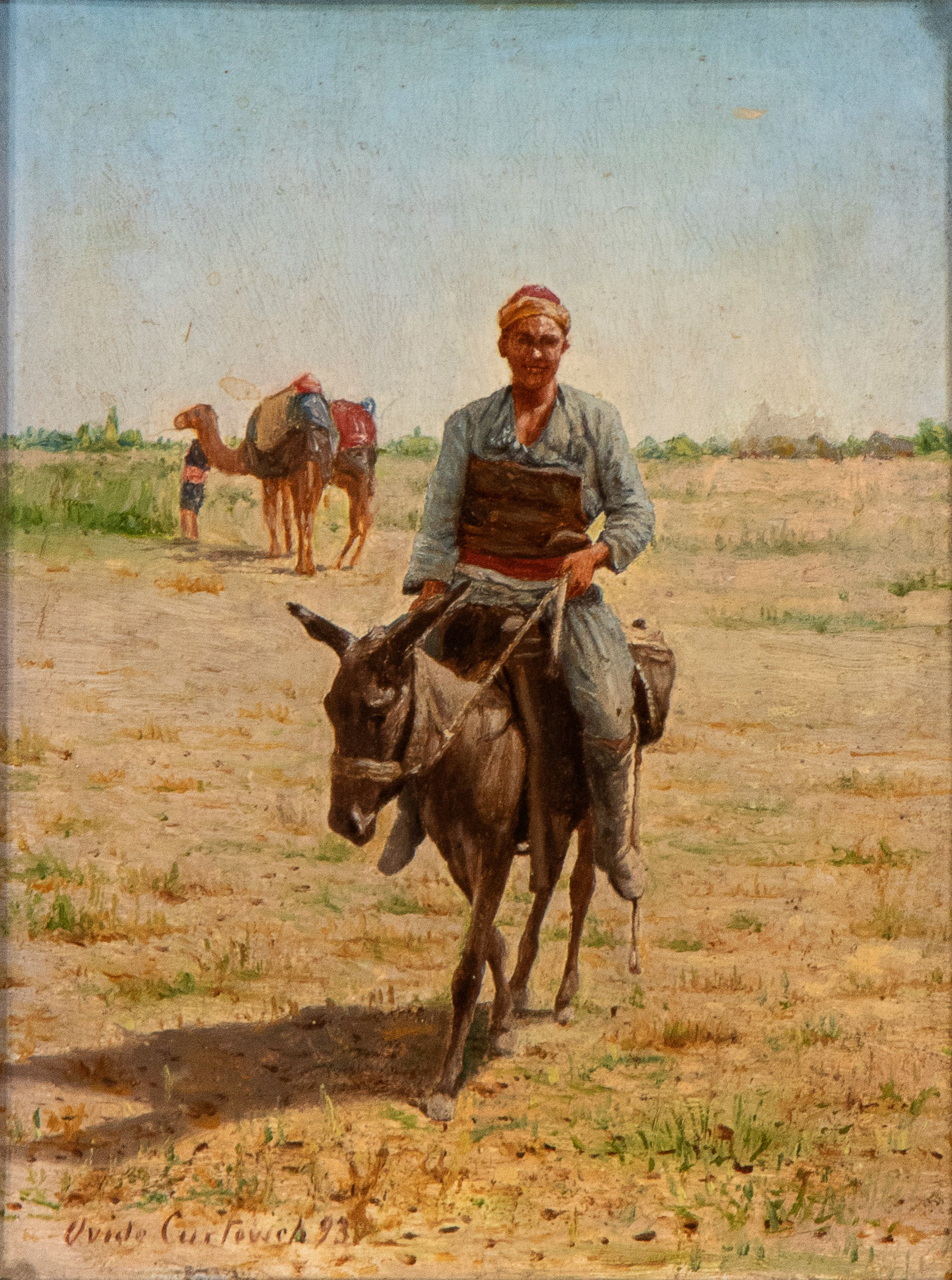
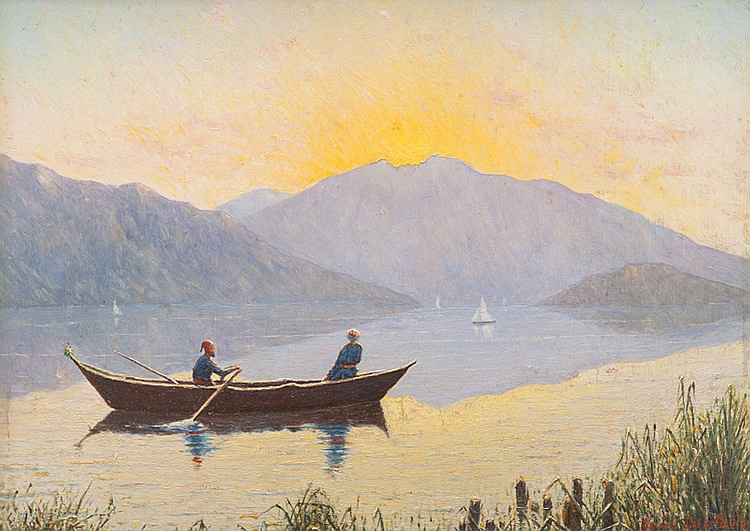
‘Prince’s Islands near Istanbul’, 1912. Oil on canvas.